Weight is the specification buyers notice last and regret first. Two custom fleece blankets can share the same size, the same imprint, and the same fabric name on a quote, yet feel completely different in the hand because one is a light 180 GSM throw and the other a dense 320 GSM plush. GSM — grams per square meter — is the number that captures that difference, and getting it right is the surest way to make a bulk order arrive feeling the way you pictured it.
What GSM actually measures
GSM is the mass of a single square meter of the fabric before it is cut and sewn. A 200 GSM fleece weighs 200 grams per square meter; a 300 GSM fleece weighs 300. Because it is a per-area figure, it is independent of the finished blanket size, which is exactly what makes it useful on a purchase order: it describes the cloth itself rather than the panel you cut from it. Within a single fleece family, a higher GSM generally means a denser pile, more warmth, better drape, longer wear, and more shipping weight.
What GSM does not do is measure softness or warmth on its own. Loft, fiber type, knit construction, and finishing steps such as brushing and anti-pill treatment all influence how a blanket feels and insulates. A well-lofted 240 GSM coral fleece can feel plusher than a flat 280 GSM polar fleece. Treat GSM as the most reliable proxy for heft you can put in writing, not as a complete description of quality.
The three weight bands and what each is for
Lightweight fleece runs roughly 100 to 200 GSM. This is the territory of promotional throws, stadium giveaways, and travel blankets where the goal is a soft, packable item at the lowest landed cost. Light fleece folds small, ships cheaply, and takes a printed logo cleanly, but it reads as economical in the hand and offers modest warmth. It is the right call when quantity and budget dominate the decision.
Midweight fleece, about 200 to 300 GSM, is the workhorse. Most corporate gifts, team blankets, and retail throws live here because the band balances a substantial feel against manageable weight and cost. A 260 to 280 GSM blanket feels like a real product without pushing freight or price into premium territory. If you are unsure where to land, this is the safest default.
Heavyweight fleece is 300 GSM and up. Premium gifts, luxury retail, and cold-weather use justify the extra density, and sherpa-backed or double-sided constructions climb well past 400 GSM. The trade-off is real: heavier cloth costs more per unit, warms more, and adds noticeably to shipping on a large order. Reserve it for pieces where the recipient is meant to register weight as a signal of quality.
How weight varies by fleece type
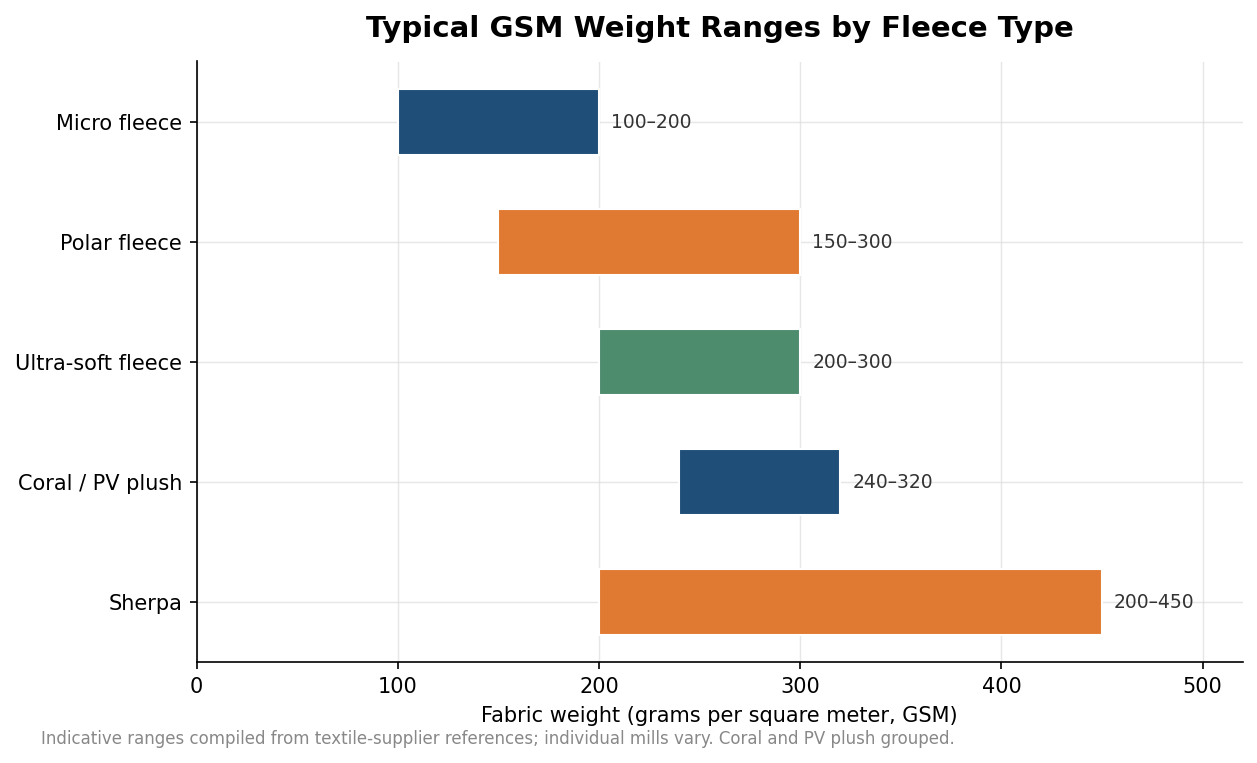
Fabric name and weight band are linked but not identical, so it helps to know where each common fleece tends to fall. Micro fleece is inherently thin, usually 100 to 200 GSM, which is why it dominates the promotional end. Standard polar fleece spans a wide 150 to 300 GSM, giving it a foot in both the light and mid bands. Ultra-soft and PV plush constructions cluster in the 200 to 320 GSM range, where the brushed pile does the work. Sherpa is the outlier, ranging from about 200 all the way to 450 GSM, and any sherpa-backed blanket effectively stacks two fabrics, so its combined weight climbs fast.
The practical takeaway is that specifying a fabric name alone does not pin down the weight. "Polar fleece" could arrive at 160 GSM or 290 GSM, and those are very different products. The chart below shows the typical spread for each family; the numbers are indicative ranges compiled from textile-supplier references, and individual mills will sit at different points within them.
Weight, feel, and the shipping math
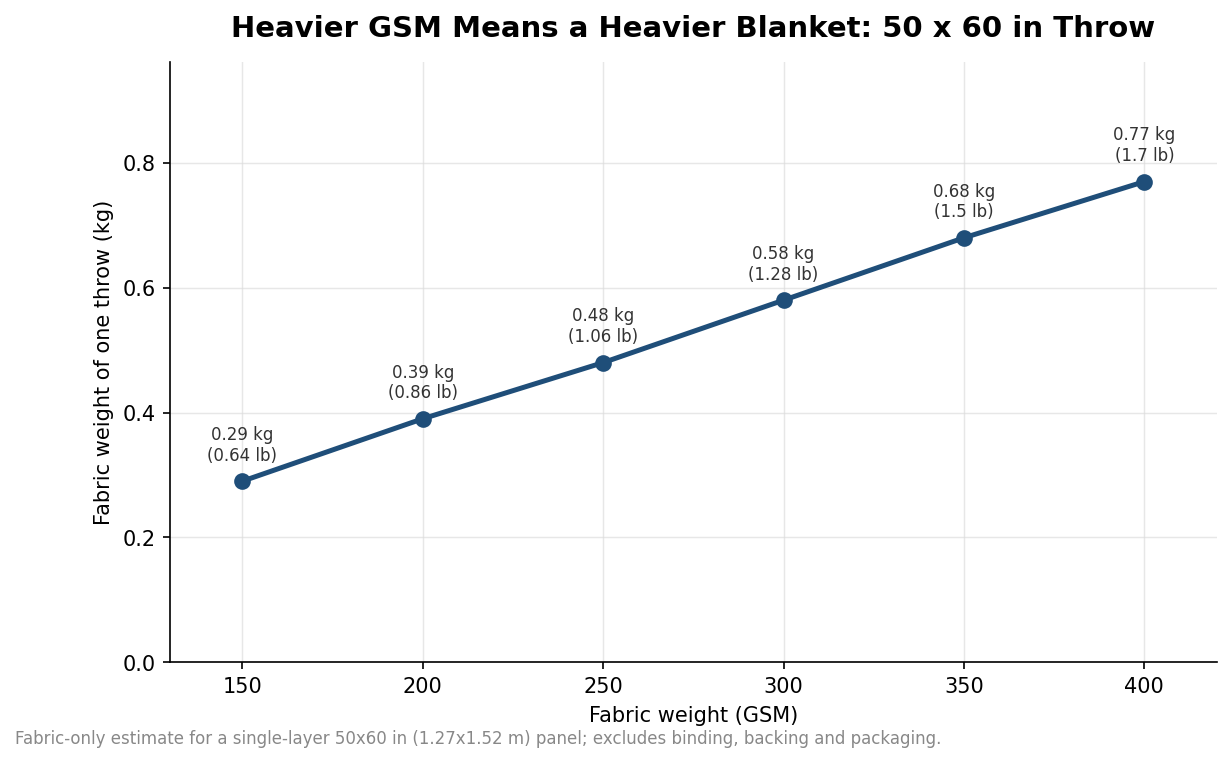
Once you settle on a GSM, you can estimate the finished blanket weight, which matters for two reasons: how the piece feels and what it costs to move. A single-layer 50 by 60 inch throw covers roughly 1.9 square meters of fabric, so its cloth weight is close to the GSM multiplied by that area. At 200 GSM the fabric alone is around 0.39 kg; at 300 GSM it is about 0.58 kg; at 400 GSM it approaches 0.78 kg. Binding, any backing layer, and packaging add to those figures, so treat them as the fabric floor rather than the shipped weight.
On a bulk order the difference compounds. Stepping a 500-piece run from 250 to 350 GSM adds roughly 0.2 kg of fabric per blanket, or about 100 kg across the order before packaging — enough to change carton counts and freight class. If you are shipping to a single event, that may be trivial; if you are drop-shipping individually, it can move the per-unit postage into a higher bracket. The point is not that heavier is worse, but that weight is a cost lever you should price before you commit, not discover on the freight invoice.
How to specify weight on a bulk order
Put the GSM number directly on the purchase order rather than relying on words like "thick" or "premium," which every supplier interprets differently. Ask for a pre-production swatch or a single sample at the exact weight before the full run, and confirm the mill’s tolerance; fabric weight commonly varies by five to ten percent between lots, so a nominal 300 GSM cloth may land anywhere from about 270 to 330 GSM and still be within spec. If warmth is the priority but freight is a concern, a mid-weight face with a sherpa back can deliver a premium feel at a lower single-fabric GSM than a heavy solid fleece.
Finally, match the weight to the job rather than to instinct. A giveaway that needs to feel generous but ship by the pallet is usually happiest in the 240 to 280 GSM range. A milestone gift that will sit folded on a sofa can carry 320 GSM or a sherpa back without complaint. When you know what GSM means, that decision stops being a guess and becomes a line item you can defend on both feel and cost.